Does this sound familiar….
“Sometimes when running, a little pee comes out.” “I get nervous when exercising because I feel like I might wet myself.” “Why do I always feel like I want to wee when I’m skipping?”
These are some of the statements and questions that are being asked more and more in my classes, so I promised a few ladies that I would do a little research to try and shed some light on the issue. So here it is…
Unfortunately, the feeling of wanting to pee or peeing a little when exercising is actually very common
Due to the embarrassment of not wanting to talk about it, many women suffer silently and don’t seek help, which could lead them to reducing activities they enjoy or participating in exercises that could improve their health.
So, if you are experiencing this condition, then you may gain comfort knowing that this issue is quite common and medically falls within the category known as Urinary Incontinence (UI), also known as involuntary urination, when there is any uncontrolled leakage of urine.
The NHS estimates that between 3 and 6 million people in the UK have some degree of urinary incontinence. A study in 2002 found that 32% of women in the UK have had symptoms of urinary incontinence in the previous 30 days. Women are more likely to suffer from stress incontinence than men, because of the effects of childbirth and the menopause. (https://www.allaboutincontinence.co.uk/incontinence-statistics)
The specific condition which is experienced when exercising is called Stress Incontinence which occurs when physical movement or activity such as coughing, sneezing, jumping, running or heavy lifting puts pressure (stress) on the bladder. It is this pressure on the bladder that may cause the sensation that you want to go to the toilet or why a little pee may actually leak out when exercising.
However, although it is common it isn’t normal.
Stress incontinence is the result of weakened vaginal and urethral muscles. More specifically, it’s where the sphincter, pelvic floor muscles which support the bladder and urethra are weakened. 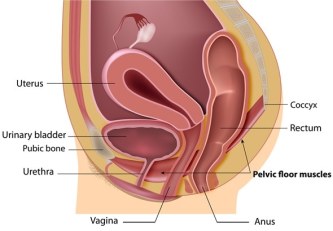
It is more common in women due to a variety of factors such as pregnancy, vagina childbirth, cesarean section, obesity and lifestyle. Once the urethra loses its tone anything that puts pressure on the pelvis and bladder can cause you to leak.
(Although it should be noted that a Urinary tract infection is where you experience either frequent urination but only a small amount of urine is passed or the urge but no urine is passed, so please check with your Health specialist!)
The good news is that weakened pelvic floor muscles like any other muscles can be strengthened to reverse Stress Incontinence.
1. Kegels
The most common exercises that are advocated for pelvic floors strengthening are Kegels. The pelvic floor refers to the group of muscles that support the uterus, bladder and rectum, forming a “hammock” of tissue.
One good way to activate the muscles is by pretending you’re trying to stop urine from coming out or going further imagine you are pulling up a tampon. Simply mimic that contraction and hold for three seconds, then release. Repeat for 10 to 15 reps, then add more the next day. Isolate those muscles, so no clenching of your bum or legs.
However, during my research, I also found a lot of evidence to suggest that Kegel exercises alone are not enough to stop this condition, due to the diaphragm and other muscles contributing to that area.
So if you have tried Kegel exercises and have had no joy then the link below ha more information & video exercises.
https://drjohnrusin.com/peeing-during-workouts-not-normal/
2. Losing weight
Okay so this is obviously a catch 22! But obesity is an aggravating factor in Stress Incontinence so losing some weight through diet and exercise will be beneficial in reducing the issue.
3. External Aids
There are several aids which you can purchase that claim to help such as, a pessary (which temporary inserts in the vagina to support urethra), or special tampons, sanitary pads or urine wicking underwear designed to help mask any leakages, keeping you dry and feeling more confident throughout your workout activity.
4. Surgery
In extreme cases some ladies have opted for surgery.
5. Specialist support
However if the situation is causing you distress, I would recommend that you speak to your GP, Gynaecologist or a specialist such as Jenni Russell and insist on getting help as the condition can not only impact your quality of life but reduce your wellbeing if you become overly concerned, anxious and even depressed.
So, if you have experienced this or know someone please let them know that they are not alone and it is not normal, as other women who have given birth do not experience it. I hope this provides first point of info for this common but embarrassing secret. Health and fitness is vital for most women and mothers, so let’s not let a little pee come between our goals!
Clench and hold Sistars!
Naomi x
Ps. Disclaimer – I am not medically qualified this is based on my own independent research please consult a physician if you have any concerns.
 MoorYoni.com